
The Shifting Landscape of Asian Cricket: The Tug of War Between Leagues, Markets and National Teams
यह लेख एशियाई क्रिकेट की संरचना का विश्लेषण है — कोई विशिष्ट मैच, स्कोर या सीरीज़ परिणाम इसमें नहीं है। मुख्य बिंदु: (1) एशियाई क्रिकेट एक इकाई नहीं, बल्कि तीन-चार अलग गति से चलने वाली व्यवस्थाएँ हैं — भारत का बड़ा बाज़ार, पाकिस्तान-श्रीलंका की पारंपरिक ताक़त, बांग्लादेश-अफ़ग़ानिस्तान-नेपाल का उभार और खाड़ी का आयोजन-आधारित मॉडल। (2) एशिया कप एकमात्र बहुपक्षीय क्षेत्रीय प्रतियोगिता है, जिसका प्रारूप-लचीलापन उसकी जीवन-रेखा है; यह एसोसिएट देशों के लिए प्रवेश-द्वार भी है। (3) आईपीएल, पीएसएल, बीपीएल, एलपीएल और आईएलटी20 के मॉडल अलग-अलग हैं — कुछ स्थानीय विकास पर, कुछ खेल-पर्यटन पर आधारित। (4) सबसे बड़ा साझा तनाव कैलेंडर और एनओसी व्यवस्था का है; कार्यभार प्रबंधन का लाभ केवल बड़े खिलाड़ी-पूल वाली टीमों को मिलता है, यह अपने आप में एक असमानता है। (5) राजस्व का केंद्रीकरण और आईसीसी वितरण मॉडल की बहस छोटे बोर्डों की प्रतिस्पर्धात्मक क्षमता सीमित करती है। (6) घरेलू ढाँचा सबसे कमज़ोर कड़ी है; समानांतर फ्रेंचाइज़ी-अकादमी व्यवस्था औपचारिक ढाँचे को बायपास कर रही है, जिससे पारदर्शिता और जवाबदेही घटती है। (7) पिच का सवाल आर्थिक है — गेंदबाज़ी-अनुकूल पिच नतीजा जल्दी देती है, बल्लेबाज़ी-अनुकूल पिच राजस्व बढ़ाती है। (8) तेज़ गेंदबाज़ी की आपूर्ति में विविधता की कमी विदेशी दौरों पर सबसे ज़्यादा उजागर होती है; घरेलू स्पिन-सफलता असली क्षमता छिपा सकती है। (9) भ्रष्टाचार-विरोधी निगरानी को स्थायी सतर्कता चाहिए, क्योंकि दाँव अब मैच-परिणाम से आगे सूक्ष्म घटनाओं तक पहुँच चुके हैं। (10) महिला क्रिकेट सबसे तेज़ी से बदला है, लेकिन प्रगति मुख्यतः एक-दो बाज़ारों की वाणिज्यिक सफलता से खिंची है। (11) मीडिया में प्रारूप-मिश्रण (जैसे टी-20 स्ट्राइक-रेट को टेस्ट विश्लेषण में घुसाना) और छोटे नमूनों को प्रवृत्ति बताना सबसे आम विश्लेषणात्मक त्रुटि है। (12) ओलंपिक-प्रवेश से नया मंच तो मिलेगा, लेकिन कैलेंडर-दबाव बढ़ेगा; समाधान मैच घटाना नहीं, प्राथमिकता तय करने की सार्वजनिक प्रणाली है। (13) मौसम और जलवायु अब कैलेंडर-नियोजन का संरचनात्मक चर हैं। निष्कर्ष: तीन प्राथमिकताएँ — राजस्व वितरण को प्रतिस्पर्धात्मक संतुलन से जोड़ना, घरेलू क्रिकेट को प्रतिभा-खोज का केंद्र बनाना, और खिलाड़ी-कल्याण को कैलेंडर का केंद्र बनाना।
In the global architecture of cricket, Asia can no longer be treated as a merely geographic unit. The continent is the game's largest audience base, its largest broadcast market, and its fastest-growing franchise economy. But within that same geography a tension keeps deepening — the primacy of the national team, the needs of the domestic structure, and the commercial pull of privately owned leagues all lay claim to the same player's calendar. This is not a report on a single match, series or event. It is an analysis of the structure in which Asian cricket currently breathes.
One continent, three different cricket worlds
Reading Asian cricket as a single unit is the most common and most misleading habit. In reality there are three systems running at different speeds. The first is India, which owns the world's largest domestic market, its most valuable franchise tournament, and the largest share of ICC revenue. The second is the traditional powers such as Pakistan and Sri Lanka, with deep cricket cultures but far less certain financial bases and international calendars. The third is the emerging or fast-rising group — Bangladesh, Afghanistan, Nepal — whose struggle is less about playing standards than about infrastructure.

Between these three worlds sits a fourth, often overlooked group: the Gulf states, Oman, the United Arab Emirates, Hong Kong, Malaysia. These are not traditional centres of the game, yet today they host a sport they inherited not as a tradition but as a product of migrant populations and commerce. The first condition of any Asian cricket analysis is that it must not weigh these four on the same scale.
The Asia Cup: the one place politics has not fully won
The Asia Cup occupies a strange position among regional competitions. It is the only multilateral tournament on a continent where cricket functions almost as religion, and yet it has never achieved the regularity that the European Championship has in football. The reason is administrative, not technical. The question of hosting, the reality of bilateral relations, and the division of broadcast rights — these three together turn the event into an object of negotiation every single time.
That is why the format keeps changing — sometimes T20, sometimes ODI, sometimes a hybrid, and sometimes a model in which one country hosts while matches are staged in another. It is easy to call this disorder, but the truth is that this flexibility is precisely what keeps the competition alive. A rigid, long-term calendar slot is simply not achievable within the political reality of this region.
The Asia Cup's second function is less discussed: it is an entry gate for associate and emerging nations. When Nepal, Oman, the UAE or Hong Kong get to play India or Pakistan, that match matters financially and inspirationally for their domestic structures. In that sense the Asia Cup is not merely a tournament of three big teams; it is the annual examination of the region's entire talent supply chain.
The geography of franchise leagues
The biggest structural event in Asian cricket has occurred over the past two decades: the privatisation of domestic cricket. The IPL in India proved that the club model — the franchise model — could work in Asia too, provided it had a triple support: broadcast revenue, city-based identity and star culture. Pakistan's PSL, Bangladesh's BPL, Sri Lanka's LPL and the Gulf's ILT20 followed.
Their successes differ, and that is the most instructive part. The IPL's strength is not only its playing standard; it is that it created an entire economy, from auctioning players to franchise shares trading on markets. The PSL kept cricket alive in Pakistan through a decade that was politically extraordinarily difficult, and its achievement lies less in ticket revenue than in giving domestic players a stage on which they had to face international-calibre fast bowling. Bangladesh's BPL is smaller, but it gave teenage talent its first professional route out of the domestic circuit.
The Gulf leagues operate on an entirely different logic. There, the purpose is not a local cricket culture but becoming a global sports-tourism destination. That is why foreign players form the largest proportion and local development moves slowest. The model may profit franchise owners, but its value for long-term development of the game is seriously questionable.
League versus country: the real calendar problem
The sharpest contradiction of league cricket lies not in the player's calendar but in administrative priority. When a national board permits a centrally contracted player to join a foreign league, it answers three questions at once. First, is the national team's priority protected in that window? Second, has the player's obligation to domestic competition been met? Third — and most awkwardly — does the board have a financial stake in that league? The No-Objection Certificate (NOC) system was created to give these three questions a formal answer, but in practice it remains surrounded by disputes every year: sometimes a player does not receive clearance in time, sometimes the board changes conditions at the last moment.
The second dimension is that league experience has now become mandatory pre-training for an international career. Most Asian selectors now proceed on the assumption that a player who has performed in high-pressure league situations will adapt quickly to international T20. That assumption is convenient, but it has no statistical backing. The correlation between league form and international form has repeatedly been found weak, because the nature of the pressure differs — in a league, the weight of defeat does not fall entirely on the player; in an international match, it does.
Workload management: science versus public relations
In recent years "workload management" has become the most used and least understood concept in Asian cricket. In theory it is clear: five days of Test cricket and six T20 matches in a month do not place equal stress on a fast bowler's body, and a batter playing an innings every three days can see mental fatigue turn into technical decline. Selectors therefore now use rest as a strategic weapon.
The problem is that rest decisions are often made not by data but by public-relations management. When a star player is withdrawn from a tour, the reason may be sports-scientific, but its presentation becomes communications strategy. This causes two losses. First, public confidence in the transparency of selection falls. Second, the player himself does not learn on what basis he was rested — and that uncertainty disrupts his career planning.
There is a third, more serious dimension that is rarely discussed: workload management benefits only teams with a large player pool. A team like India can rest its lead fast bowler and field another international-standard bowler in his place. Sri Lanka or Bangladesh cannot afford that luxury — resting one player directly reduces the team's competitiveness. In this sense workload management is itself a structural inequality, not merely a medical facility.
The fast-bowling supply chain
Asia's oldest weakness has long been assumed to be fast bowling, and that perception is not entirely wrong, but it is now outdated. Pakistan has always built a lineage of fast bowlers in which raw talent was pulled from informal settings and pushed to international level. India made the largest structural investment in this area over the past decade — a national academy, fast-bowling contracts, and pace-friendly pitches in domestic tournaments. Sri Lanka and Bangladesh have each produced excellent fast bowlers from time to time, but their systems for keeping them fit and consistent over long periods have been weak.
Afghanistan's rise is the most interesting chapter in this whole debate. Despite limited resources and repeated isolation from international cricket, it produced players in both pace and spin who earned global recognition. That is evidence that fast-bowling development depends less on the volume of infrastructure than on the quality of coaching and access to competition.
Even so, a structural threat persists: the diversity of the fast-bowling supply is severely limited. Most Asian teams' pace attacks still depend on bowlers who operate with one type of line and length, and when the pitch offers neither bounce nor swing they have no second option. The effect is clearest on overseas tours — these bowlers remain effective at home, but once conditions change, control disappears.
The spin tradition and its future
Spin has been Asian cricket's identity, and it is both its greatest strength and its greatest trap. The dominance of spin on home pitches produced generations of bowlers who ruled world cricket. But that same dominance created an imbalance — the domestic system gave lower priority to developing fast bowling, because success through spin came sooner.
In modern limited-overs cricket, the role of spin has changed entirely. Once a spinner was a run-containing weapon; now he is a wicket-taking weapon in the middle overs. This shift has changed the spinner's skill set — more important than turning the ball sharply is varying pace, making the bowling hard to read, and reading the batter's footwork. Asian spinners adopted this change quickly, and today a large share of the world's most effective limited-overs spinners come from this region.
But a warning is necessary. Success built on spin-friendly pitches can sometimes mask the true ceiling. A spinner who takes five wickets every match at home may have no plan when he encounters overseas pitches with more bounce and less turn. The problem belongs not only to the bowler but to the selection system, which prefers domestic numbers over experience of playing in foreign conditions.
Pitch, venue and the geography of the market
The pitch question in cricket has never been purely technical. In Asia the pitch has always been an economic and political object. A bowling-friendly pitch in a home series benefits the host team and can end a match in three days, costing broadcast revenue. Conversely, a batting-friendly pitch stretches the match to a fifth day, raising both ticket sales and advertising, but reducing the likelihood of a result. Every host board makes its choice within that dilemma.
Gulf venues are the extreme form of this logic. They combine large stadiums, air-conditioned facilities and neutral pitches, ideal for hosting international tournaments. But these venues have no permanent audience base — spectators come not to watch cricket but to watch players. That means their commercial success derives from event management, not from the growth of a cricket culture. In the long run the model is not sustainable, because if hosting rights shift to another region, utilisation of these stadiums would fall close to zero.
Domestic structure: the weakest link
If Asian cricket has one shared weakness, it is the gap between domestic competition and international cricket. India has a long tradition in competitions such as the Ranji Trophy and players have emerged from it, but questions about its quality and its calendar slot persist. Pakistan's domestic structure suffered administrative instability for decades, and the format changed repeatedly, so players never got a stable platform. In Sri Lanka and Bangladesh too the domestic audience base is weak and the financial base depends on international broadcast revenue.
The most direct consequence is that domestic cricket is no longer the main channel of talent discovery. Franchise trials, agent networks and regional academies now form a parallel system that can bypass the formal domestic structure entirely. That is an opportunity for some players but a risk for the game, because parallel systems tend to be weaker in transparency, fairness and accountability.
Broadcast economics and its limits
Asian cricket's financial engine is the auction of broadcast rights. It looks like a simple equation — large audience base, large advertising market, large sale price. But the simple equation breaks down in several places. First, there is a wide gap between the size of the audience and its ability to pay. In a market like India a subscription model works, but in much of South Asia advertising-funded free-to-air is the only viable route. Second, broadcast rights prices in several markets have reached levels where the cost-benefit ratio stops being rational. Winning an auction and making a profit are two different things, and several broadcasters have learned that difference expensively.
Third, and most importantly, revenue distribution is centralised. When one market generates the bulk of a region's revenue, the competitive capacity of smaller boards is automatically constrained. They draw a smaller share from the same pool while having to compete against the largest team. That imbalance does not correct itself; it can only be corrected through revenue-sharing rules, and those rules have always been the centre of dispute.
The ICC revenue model: a debate that never ends
The upheaval in the ICC's revenue distribution model over the past decade sent a direct message to Asian cricket: administrative power and financial share are two sides of the same coin. When a model granting larger boards a bigger revenue share and more weight in decision-making came into force in 2026, the sharpest opposition came from smaller member nations. The model was later revised, but the fundamental question was never resolved: is the ICC's job to protect the highest-earning board, or to spread the game into regions where its commercial base is still forming?
One aspect of this debate is under-discussed, and it is structural. Financial inequality affects not only smaller boards' incomes but their playing strategy. A board surviving only on its domestic broadcast contract becomes dependent on another board's hosting fee in order to tour. That produces calendars in which matches are set not by competitive logic but by revenue need.
Anti-corruption framework: permanent vigilance
The risk of betting and fixing in cricket is not new, and Asia has been its most sensitive region — because the audience passion is most intense here, the illegal market is largest, and in some parts players' incomes are relatively low. That combination is the most dangerous. The ICC's anti-corruption unit and national boards' own units work to counter this risk, and they have acted in several major cases.
But the structural challenge is that the scope of monitoring keeps shifting. As the number of T20 leagues has grown, so has the number of matches requiring scrutiny, and monitoring density is lower in smaller leagues. Moreover, betting market activity is no longer limited to match results — wagers are placed on micro-events that traditional frameworks struggle to detect. Assuming the anti-corruption system is now "established" is therefore itself a risk. Vigilance here must be permanent, not campaign-based.
Women's cricket: the fastest-changing segment
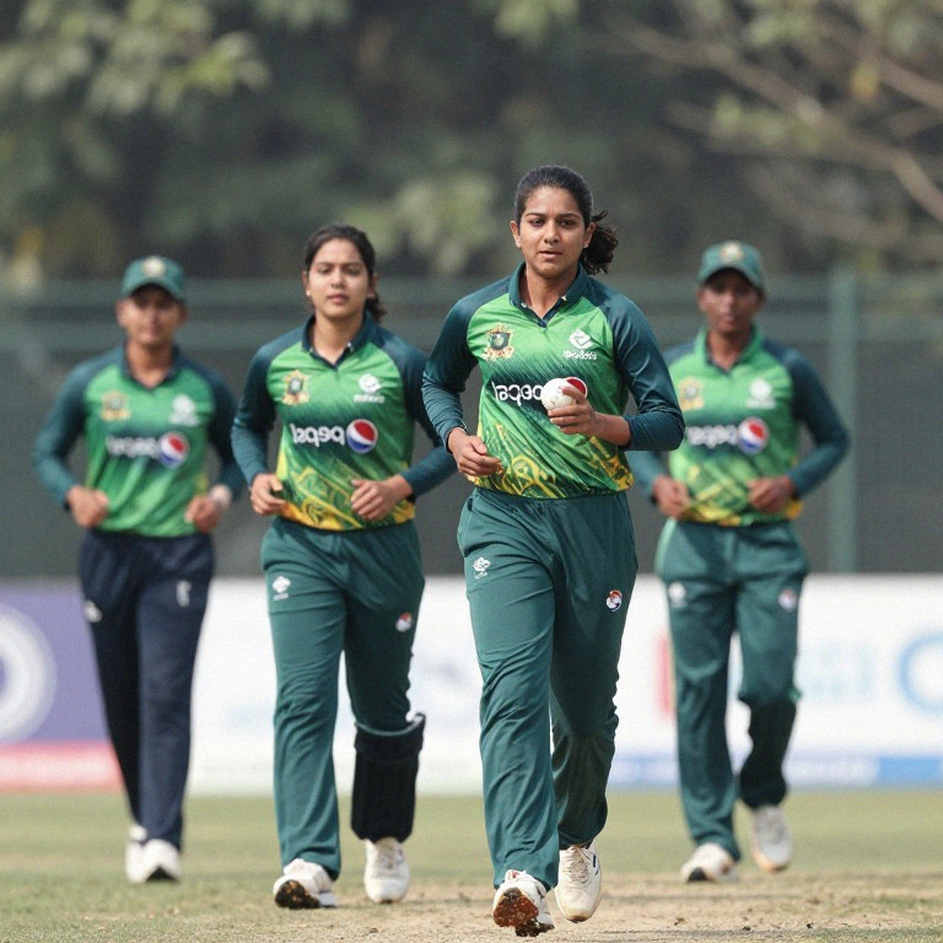
The part of Asian cricket that has changed most in the past five years is not the men's game. The launch of the Women's Premier League in India showed the entire South Asian system a new economic model — a tournament that lifted central contracts, franchise investment and broadcast value simultaneously. The journeys of Pakistan's and Sri Lanka's women's teams have also been notable, and they have competed at international level with limited resources.
Yet a basic imbalance persists. In several countries women players do not have the kind of stable franchise career that men do, domestic competitions are few, and media coverage is proportionally inconsistent. That means the progress achieved has been pulled mainly by commercial success in one or two markets, not by a structural plan for the whole region. That is not sufficient for long-term sustainability.
Data, analytics and their misuse
Cricket is now more data-driven than perhaps any other sport. Ball-by-ball records, speed-rotation-angle information from tracking systems, batters' shot maps and bowlers' length analysis are no longer confined to analysts; they sit in team training rooms. Asian boards have invested heavily here, and analytics-led preparation is now part of the selection process.
But data has a side effect: authority over numbers often becomes authority over decisions. An analyst who looks only at historical data may overlook the player whose technical change has not yet appeared in the numbers. Cricket history contains many players whose first few matches looked ordinary and whose subsequent careers were outstanding. The useful approach, therefore, is to treat data not as a substitute for judgement but as one component of it — giving bowling angles and a batter's footwork as much room as strike rate.
Audience, emotion and the burden of expectation
The greatest strength and the greatest weakness of South Asian cricket culture are the same thing: emotional intensity. Cricket here is not merely a sport but a vehicle of identity. The positive side is that players get an audience that gives them room even after failure, and the game gets financial security. The negative side is that reaction to failure is disproportionate, and the burden of expectation arrives on young players long before they are ready.
One pattern repeats again and again: after one or two brilliant performances a teenager is declared "the next big thing"; then when he produces ordinary numbers over the next ten innings, the same media machinery calls him "overhyped". This cycle is harmful to player development because it builds an opinion machine with no regard for sample size or format difference. Until a player has at least two seasons and data across different conditions, drawing a firm conclusion is premature — that is a technical rule, not mere courtesy.
Media, broadcast and the quality of coverage
Asian cricket's media economy faces a threefold pressure. First, the audience wants speed — instant comment, instant verdicts. Second, broadcasters want continuous content, which means something called "analysis" must be published every day, whether or not there is an adequate basis for it. Third, in a click-based model, controversy and conflict attract the most attention, so opinion-led coverage gets more space than fact-led coverage.
The effect falls particularly on statistical reporting. T20 strike rates slip into Test analysis; small-sample numbers are presented as trends. The standard for good sports journalism is simple — state which format, which period and what sample the data covers, and where there is insufficient information, say clearly that no conclusion is possible. That is not weakness; it is professional honesty.
Olympics, calendar and the future structure
The decision to include cricket in the Olympics has opened a new path for Asian cricket. The Olympic stage can carry the game into countries where it is still marginal, and this matters especially for small Asian member nations, because an Olympic quota means government funding and a place in national sports policy.
But calendar pressure will rise with it. An already crowded international calendar, expanding franchise leagues, and now an Olympic qualification cycle will together increase the load on players while the weeks available for rest shrink. The answer is not simply to reduce the number of matches; the real answer is a clear, public and mutually acceptable system for setting priorities. Until such a system exists, each board will keep deciding in its own interest and the player will keep paying the price.
Climate and weather: the overlooked variable
In Asian cricket, weather is not a background element but a structural variable. The monsoon is fixed in South Asia, and several series are scheduled within that window — making rain-affected matches, Duckworth-Lewis-Stern decided results and spectator frustration routine. In the summer months, temperature and humidity create serious health risks for players, especially in the longer format.
This is no longer merely a logistics question. As climate patterns shift, calendar planning based on historical weather data becomes less reliable. That means future hosting decisions must include weather-risk assessment, not just stadium capacity and broadcast revenue. This is an area where Asian boards could take a leading global role, because they are the first to face the climate risk.
Conclusion: searching for balance
If the current state of Asian cricket must be summarised in one sentence, it is this: it is simultaneously the world's richest and most imbalanced cricket region. It has everything the game needs to stay alive and thrive — passionate audiences, vast markets, deep layers of talent and strong administrative capacity. But it also has what weakens any system — highly centralised revenue, unequal competition, rising player workload and neglect of domestic structures.
Three priorities stand out. First, linking revenue distribution to competitive balance rather than market size alone. Second, restoring domestic cricket as the centre of talent discovery, so the pathway does not run only through private leagues and agent networks. Third, making player welfare the centre of calendar planning rather than its afterthought.
None of these solutions is technical; all are administrative and political. And that is the real difficulty of the subject. On the field, Asia has progressed over three decades far beyond its administrative progress. If that gap is not closed, the game will keep buckling under the weight of its own success — more matches, more money, more noise, but less stability. And the first casualty will be the person at the centre of the entire system: the player.