
The New Geography of Asian Cricket: Money, Power and Fatigue
एशियाई क्रिकेट का केंद्र अब सिर्फ़ मैदान नहीं, बल्कि फ्रैंचाइज़ी लीग, प्रसारण अधिकार और कैलेंडर की अर्थव्यवस्था है। भारत का बाज़ार पूरे महाद्वीप का राजस्व और कैलेंडर तय करता है, जबकि श्रीलंका, नेपाल, ओमान और बांग्लादेश जैसे बोर्ड अक्सर प्रतिभा उत्पादक की भूमिका में रह जाते हैं। सबसे बड़ा दबाव खिलाड़ियों के कार्यभार और मानसिक थकान का है, क्योंकि लीग और राष्ट्रीय टीम दोनों की माँगें एक साथ बढ़ रही हैं। महिला क्रिकेट और ओलंपिक 2028 एशियाई क्रिकेट के दो सबसे बड़े अवसर हैं, बशर्ते निवेश घरेलू ढाँचे और जमीनी स्तर तक पहुँचे, न कि सिर्फ़ शीर्ष स्तर पर।
Asian cricket today sits inside a strange contradiction. On the field the game looks faster, more aggressive and more theatrical than ever — sixes, yorkers, impossible catches and contests dragged to the final ball. Off the field, the same sport looks more tired, more fragmented and more calculated. The calendar is full, players keep moving, boards keep hunting for new revenue streams, and the spectator often cannot tell which match actually matters. That contradiction is the real story of Asian cricket.
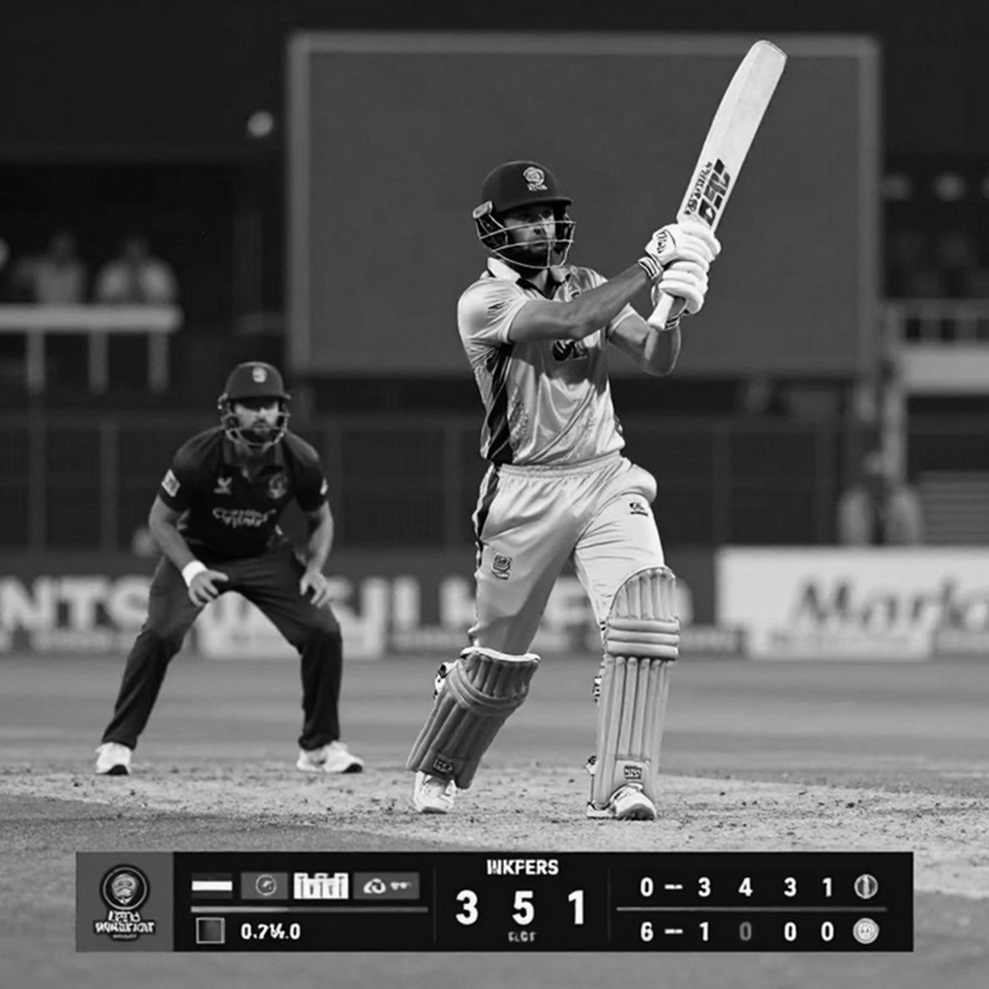
This report is not a review of a single match, series or player. It is an attempt to understand the structure in which Asian cricket breathes — a structure built from franchise leagues, national teams, broadcast rights, grassroots infrastructure, women's cricket and administrative politics. What we see on the field is the output of that structure, whether we admit it or not.
Part one: where the money comes from and where it goes
India is the centre of Asian cricket's economy. The size of the Indian market, the appetite of advertisers and the auction value of media rights have shaped the calendar of an entire continent. When Indian broadcast rights rise, the effect reaches Sri Lanka, Bangladesh, Afghanistan and Nepal — sometimes as direct investment, sometimes as sponsorship, sometimes simply as the price of players.
But a market at the centre does not distribute benefit evenly. Large markets such as India, Pakistan and Bangladesh have their own domestic leagues, broadcast deals and audiences. Smaller or mid-sized markets — Sri Lanka, Nepal, Oman, the UAE, Hong Kong — often have only one route left: producing players for bigger leagues, or chasing hosting opportunities for major tournaments. That creates a clear hierarchy: some countries produce the sport, some operate it, and some merely consume it.
This hierarchy is dangerous for the game, because the things a team most needs to stay strong — consistent domestic competition, stable income and long-term investment — are exactly the things smaller boards have least of. Nepal has talent but lacks large stadiums and permanent broadcast revenue. Oman and the UAE have infrastructure but their audience base is heavily expatriate, which weakens local roots. Bangladesh has hunger for cricket, but instability in its domestic structure keeps that talent from being fully rewarded.
Part two: the franchise era
The biggest change in Asian cricket over the past decade and a half has come from franchise leagues. The Indian Premier League proved early that cricket could be sold as entertainment. Pakistan Super League, Lanka Premier League, Bangladesh Premier League, ILT20 and the Afghanistan Premier League followed. Each has struggled with its own context — security, financial stability, audience numbers and calendar space.
These leagues changed two things. First, the economics of a cricketer's career shifted. A player's income once came mainly from national contracts and sponsorship; now, for many players, franchise contracts are the largest share. Second, player identity shifted. A player is no longer only a national representative but a brand, with a market value that rises and falls with team, form and tournament.
But league expansion came with problems. The most obvious is the calendar. When every board demands a window for its own league, the international calendar runs out of room. Players carry a growing load, and national preparation is often squeezed between franchise seasons. This is not only a question of volume but of quality — a player who is constantly travelling will be least fresh for the matches that matter most.
The second problem is talent imbalance. When large leagues pick players from smaller nations, the benefit is clear: experience, income and visibility. But there is a less visible risk — domestic cricket can weaken, because the best players are often busy abroad while local tournaments are played without them. Over time this can thin out grassroots competition, like a farm selling its best seed at market and leaving too little to plant.
Part three: national team versus league
A new debate has sharpened in Asian cricket: where does a player's first loyalty lie? To the national team, or to the franchise that pays him? The debate is usually conducted emotionally, but its root is economic. When a franchise contract is several times larger than a national one, expecting loyalty is not easy.
The answer is not moral instruction but structural reform. Boards need to build financial and career frameworks in which playing for the national team also makes economic sense, not just ceremonial sense. Some boards have raised central contract values, some have increased match fees, and some have clarified the NOC process for league participation. These steps matter, but they remain uneven.
A more complicated point is that franchise cricket has not weakened rivalry between national teams; it has preserved it in a new form. When Indian and Pakistani players appear in the same league for different teams, the political charge of bilateral national contests does not fade — it simply moves off the field. Franchise cricket has not become a platform for cooperation; it has become a commercial platform. That is not wrong in itself, but expecting cricket to soften politics is unrealistic.
Part four: fatigue — the most underpriced risk
Look at the Asian cricket calendar and the most visible element is travel. An international player's year is split across countries — Tests in Australia, ODIs in England, a league in India, a franchise tournament in South Africa. Add changing conditions, different pitches, different balls and different time zones. The risk of physical injury is obvious, but the risk of mental fatigue is more serious and has long been taken less seriously.
In recent years several senior players have announced breaks — sometimes citing mental health, sometimes framed as workload management. That is a good sign in that players now feel able to say it, but also a worrying sign that the structure creates so much pressure that players must ask for rest themselves. Workload management is now in every board's vocabulary, but in practice it is often decided by tournament priorities rather than player needs.
The direct effect is on quality. When top players are exhausted, the standard of contests drops, injuries rise and careers shorten. In a sport where fast bowlers already have short careers, the problem is even sharper. Look at Asia's fast-bowling list and you will find many who lost their best years to injury — and that is not coincidence.
Part five: grassroots — where the real game is decided
A cricket nation's strength is not set by its stadiums but by the number of its grounds. India has thousands of club-level grounds producing new players every year. Pakistan has deep cricket roots, though security and resource challenges have weakened its domestic structure. Bangladesh has invested heavily at grassroots level over two decades and that shows in the depth of its national side. Sri Lanka has traditionally maintained a strong school cricket system, which remains its biggest asset.
The biggest grassroots challenge is inequality — between city and village, between rich and poor, and now between boys and girls. The cost of cricket is a real barrier. Good bats, helmets, pads, coaching fees and tournament participation are heavy for many families. When the entry gate is expensive, a large share of talent stays outside.
The answer is not only government schemes. Boards must strengthen school and college tournaments, make affordable equipment available and increase the number of coaches. Some countries have taken concrete steps — cricket's popularity in Nepal has created new energy at school level, and Afghanistan built an international team out of refugee camps, which is an extraordinary achievement in itself.
Part six: women's cricket — the fastest-growing part
The most encouraging part of Asian cricket is women's cricket. The launch of the Women's Premier League in India gave domestic women's cricket visibility and created a new economic base for players. Before that, building a career in the game was difficult for many women cricketers; now it is becoming possible.
Players such as Sri Lanka's Chamari Athapaththu have shown that Asian women's cricket lacks neither talent nor commitment — it lacks opportunity, visibility and money. Bangladesh's women's team has also established itself in Asian and global tournaments. Pakistan's women's side has talent, but limited resources and opportunity hold it back.
Progress is still uneven. Some countries have leagues and television coverage; many do not. Until every board treats women's cricket with equal seriousness, the full potential of Asian women's cricket will not emerge. The biggest need is not only teams but a permanent domestic tournament structure in which players can play regularly every year.

Part seven: the 2028 Olympics — new opportunity, new pressure
Cricket's inclusion in the 2028 Los Angeles Olympics has set a new priority for Asian boards. Cricket at the Olympics is not just another event; it is global recognition — and for Asian nations it is a chance to give their leagues, players and markets new global visibility.
There is a complication. The Olympic calendar is already crowded, and cricket must again earn its place — in T20 format, with a limited number of teams, in a programme where time and space are both constrained. Boards will have to decide how much priority they give to Olympic qualification and which tournaments they are willing to sacrifice.
The opportunity is specific for Asia because cricket's popularity is already deep here. The problem is that the qualification process and the importance of regional tournaments can collide. Boards need a clear roadmap — not only for the Olympics but for what comes after, because the real benefit will only arrive if it reaches the grassroots rather than remaining a once-every-four-years spectacle.
Part eight: emerging markets — Nepal, Oman and beyond
The most interesting stories in Asian cricket are now written not in the big countries but in the smaller cricket nations. Nepal is the clearest example. Despite limited resources, Nepal has built an international identity within a decade and its players now appear in various leagues. Players such as Sandeep Lamichhane have shown that with talent and opportunity, a small country can make a large impact.
Oman and the UAE have built their place on expatriate populations and good infrastructure. Their model is different — the local population is small, so players of South Asian origin play a large role in national teams. That raises an interesting question: what does national identity mean? It is not an easy question, and rules alone cannot settle it, but it is the reality of Asian cricket and must be acknowledged.
In countries such as China and Japan, cricket is still at an early stage, but their potential cannot be ignored. China has resources but lacks cricket culture; Japan has discipline but a small market. If these countries see long-term investment, the geography of Asian cricket could change — but that is work for decades, not for a few tournaments.
Part nine: administration, politics and bilateral relations
A bitter truth about Asian cricket is that administrative politics makes headlines more often than the sport. The absence of bilateral series between India and Pakistan is old news, but its effect runs through the whole regional calendar. When large countries do not play each other, smaller countries lose revenue opportunities and pressure on regional tournaments increases.
Demands for reform of the Asian Cricket Council have been raised for years — more transparency, more equal representation and a more stable calendar. But the real problem is that power is calibrated to market size, and that balance will not change on its own. Smaller boards need to build a shared agenda together — not just complaints, but practical proposals.
Another administrative dimension is the risk of match-fixing and corruption. As the number of leagues has grown, so has the challenge of monitoring. Asian boards must keep anti-corruption units independent and empowered — this is not only a moral question but a question of market trust.
Part ten: broadcast rights and media economics
Cricket's biggest revenue source is broadcast rights. When a board signs a large broadcast deal, the effect goes directly to player salaries, stadium construction and grassroots programmes. But there is a clear imbalance in the broadcast market: large markets have more options and more bidders, while smaller markets settle for lower prices.
The arrival of digital platforms changed this market. Rights are now often sold in pieces — television, streaming, overseas. That has created opportunities for smaller boards but also more complexity. The biggest challenge is holding audience attention, because competition is no longer only other sports but every form of entertainment.
Piracy is another issue. When rights are expensive, illegal streaming grows and revenue suffers. Smaller boards sometimes lack the resources to fight it. The answer is not only legal action but affordable and accessible access.

Part eleven: stadiums and hosting capacity
Asia has large stadiums — vast grounds in India, state-of-the-art air-conditioned complexes in the UAE, good facilities in Sri Lanka and Bangladesh. But hosting capacity is not measured by stadium beauty. It is measured by crowd management, security, transport, broadcast facilities and resilience to weather.
Climate change is now clearly relevant. Rising heat and irregular rain are affecting match schedules. If the trend continues, Asian cricket will have to change not only ground selection but calendar design around weather. This is a subject discussed far too little, yet it will affect every board.
Part twelve: data, technology and sports science
In modern cricket, data is no longer merely an assistant but a decision-maker. Bowling plans, field placement, batting order and even auction prices are shaped by data. Large boards and large franchises have full analytics departments; smaller boards often do not have a single full-time analyst.
This inequality can gradually change results. Democratising technology matters — cheap video analysis tools, shared data platforms and coach training programmes. If technology remains only with the wealthy, competition weakens further.
Sports science is equally important. Injury management, rehabilitation, nutrition and sleep management are now integral. Boards that invest will have players with longer and better careers. The investment looks expensive, but compared with careers lost to injury it is cheap.
Part thirteen: challenges to face
If Asian cricket is to be stronger in the next decade, some difficult decisions are needed.
First, calendar discipline. It is impossible to give space to every league and every bilateral series. Priorities must be set clearly — which tournaments are mandatory for national teams, which are optional.
Second, fair revenue sharing. If large boards invest a share of their revenue in regional development, the whole ecosystem benefits. This is not charity; it is shared interest.
Third, player welfare as a priority. Mental health support, workload management and proper rest policies are no longer luxuries but necessities.
Fourth, sustained investment in women's cricket. Launching one league is not enough; domestic structure, coaching and media coverage are all required.
Fifth, reach the grassroots. Affordable equipment, more grounds, more coaches — the least glamorous and most necessary investment of all.
Part fourteen: conclusion
Asian cricket is in transition. It has money, talent and an immense love from audiences. But it also has a structure that often works against the very game it runs. When the calendar prioritises busyness and league counts and treats the player's body and mind as an afterthought, the sport weakens in the long run.
The biggest truth is that cricket's future will not be decided in large stadiums but on small grounds — where a child picks up a bat for the first time, and where a girl gets a chance to play for the first time. If Asian boards invest at that level, the talent that emerges in the next decade will lift the game. If not, a glossy but exhausted professional structure will remain, in which the sport survives but loses the vitality that makes it Asia's most loved game.
The choice belongs to the boards, but the stake belongs to everyone.