
Format First, Numbers Second: The Case for Data Discipline in Asian Cricket Coverage
एशियाई क्रिकेट कवरेज में सबसे बड़ी पद्धतिगत कमज़ोरी फॉर्मेट का स्पष्ट उल्लेख न होना है — टेस्ट, वनडे, टी20 और द हंड्रेड के आँकड़े आपस में तुलनीय नहीं हैं। किसी भी खिलाड़ी के मूल्यांकन के लिए भूमिका, फॉर्मेट, नमूना आकार, घरेलू-विदेशी विभाजन और करियर-चरण — ये पाँच जानकारियाँ अनिवार्य हैं। आईसीसी रैंकिंग तालिकाएँ फॉर्मेट के अनुसार अलग हैं, इसलिए 'एशियाई टीम' जैसे सामान्य वर्गीकरण से किसी स्तर का अनुमान नहीं लगाया जा सकता। लीग क्रिकेट में नीलामी कीमत वाणिज्यिक मूल्य है, खेल-मूल्य नहीं; आईपीएल, पीएसएल, आईएलटी20, एसए20 और एलपीएल की पूँजी संरचनाएँ भिन्न हैं, अतः एक से दूसरे का अनुमान अवैध है। गवर्नेंस और साख संबंधी किसी भी निष्कर्ष के लिए ठोस घटना और प्रमाण आवश्यक है; बिना तथ्य के 'कम जोखिम' का लेबल देना अनुचित है। क्रिकेट के आँकड़े सार्वजनिक रूप से सत्यापन-योग्य हैं, इसलिए बिना स्रोत के कोई संख्या प्रकाशित करना भरोसे को सीधे नुकसान पहुँचाता है।
In the past decade, cricket coverage has expanded at a pace matched only by the rise in unsupported claims within it. Hundreds of reports follow every match, every series is tied to some 'turning point in an era', and every young player is declared 'the next superstar' after a single good performance. Amid this tide, a basic discipline is quietly eroding: ensuring that every figure and every conclusion is anchored to a verified source. In the Asian cricket context this discipline becomes even more essential, because a single geographic umbrella shelters radically different competitive cultures — the flat decks of Sharjah, the slow turners of Dhaka, the seaming mornings of Kandy, the humidity of Dambulla. Their tactical implications are opposite to one another, so inferring playing conditions from the word 'Asia' is not reasonable.
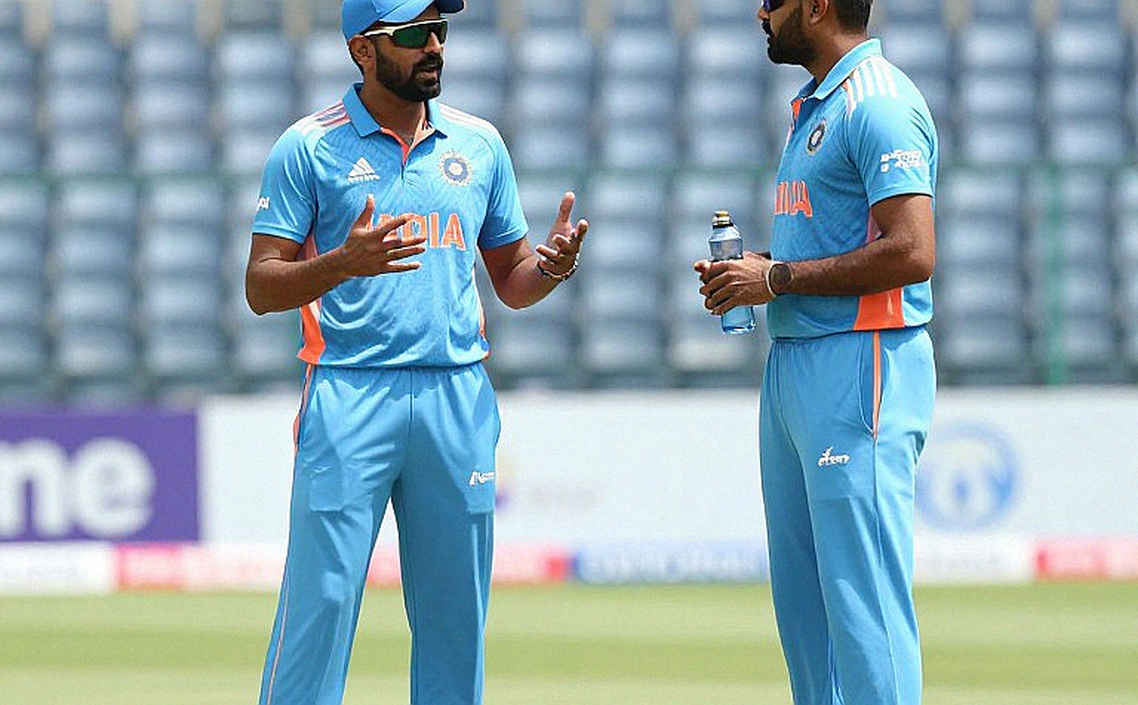
Format is the primitive unit of analysis
In cricket analysis, format is not decorative information but the foundational unit. Test, ODI, T20 and The Hundred differ in structure, duration and strategic logic. Five-day cricket is a game of patience and session-by-session state, while the 20-over game is one of risk management and snap decisions. The direct consequence is that batting average, strike rate and bowling economy rate are comparable only within the same format. A player's strong T20 record does not automatically transfer to a Test assessment, and comparing Hundred figures directly with T20 figures is a methodological error. When a piece does not state the format explicitly, all its numbers become suspect, because the reader silently assumes the format they understand is the one in use.
The context of numbers: strike rate and phases
'Strike rate' is inherently ambiguous in cricket — for a batter it is runs per hundred balls, for a bowler it is balls per wicket. Without stated context the term is meaningless, yet reports often leave it undefined. Similarly, economy rate gives only runs per over and does not indicate in which phase those runs were conceded. In limited-overs cricket, the powerplay and the death overs are the two phases where matches are most often decided, because one imposes fielding restrictions and the other frees the batter to take risk. Without phase-wise data, a bowler's overall economy rate can be misleading. The Duckworth-Lewis-Stern method used to revise targets in rain-affected matches is another such factor that is frequently ignored — a match won under DLS is not as clean a measure of skill as it appears.

Five indispensable pillars of player assessment
Any fair assessment of a player is incomplete without five things: role, format, sample size, home-versus-away split, and career stage. The benchmarks for an opener and a finisher differ — one is expected to provide stability, the other pace. Sample size is the most neglected question: calling five innings of brilliance a trend is a serious methodological error. Home-ground numbers often mask weaknesses, because familiar conditions temporarily hide technical flaws. The age-curve inflection point and injury history matter equally — workload management for a fast bowler past thirty and technical maturity for a 22-year-old batter belong to entirely different categories.
Team landscape and the limits of rankings
When using ICC rankings in team-level analysis, it must be remembered that the tables are separated by format. Within Asia alone there is a top power like India, strong mid-tier sides like Pakistan, Sri Lanka and Bangladesh, and an emerging force like Afghanistan. That spread is so wide that guessing a tier from the phrase 'Asian team' becomes meaningless. Similarly, the India-Pakistan rivalry has a distinctive structural feature — bilateral series have long been frozen for political reasons and the two sides meet mainly in ICC events and the Asia Cup. That fact is not analysis in itself, but whenever a claim is made about this fixture, the limits of the sample should be stated.
League economics: market value versus sporting value
In both Asian and global contexts, the capital structures of franchise leagues differ fundamentally from one another — the IPL, PSL, ILT20, SA20 and LPL do not share the same economic backdrop or governance system. Extrapolating from one league to another is therefore risky. The central question of this area is always the same: commercial value differs from international sporting value. The price paid at an auction is not a measure of a player's ability but the product of demand, availability and franchise need at that moment. One season's good innings can inflate the next auction price disproportionately. The IPL's Right to Match mechanism is an example of this market dynamic, letting a previous franchise match the top bid to retain a player. Storing auction prices and treating them as current is the most common error in this field.

Governance, rules and integrity
Governance analysis is possible only when a concrete event exists — a rule change, a board decision, a disciplinary action or an eligibility dispute. Without such an event, rating risk 'low' is as unjustified as rating it 'high', because a low-risk label can inadvertently signal exoneration. The durable issues in this area are known: the debate over ICC revenue distribution, control over player mobility through No Objection Certificates issued by national boards, and monitoring by the anti-corruption unit. Historical precedents — the 2026 Cronje affair, the 2026 Pakistan spot-fixing case, the 2026 IPL spot-fixing case — are useful as context, but the facts of any new event must be established before applying them. Levelling integrity allegations without evidence and dismissing them without evidence are both contrary to journalistic standards.
Narrative, risk and industry transmission
Analysis of public narrative demands the most caution, because this is where the 'overhype premium' and the 'legacy premium' are born. The pressure built on a young player after a fast start in a short league, and the deference built on a veteran's old records, both create rational expectation gaps. On the risk side, six categories warrant continuous monitoring: sporting performance, personnel, commercial, rules and integrity, public opinion, and systemic. Among these, injury and workload is the most hidden danger, because it often begins affecting performance before it shows in the statistics. The industry transmission chain is clear: it starts with youth development and talent supply, passes through national teams and leagues, and reaches broadcast and commercial markets. No point in this chain can be broken without a concrete event.
Conclusion: the need for an editorial checklist
The cheapest way to improve quality in cricket journalism is not expensive technological investment but a simple checklist: is the format stated explicitly; is the source and period of every figure given; are sample size and its limits acknowledged; is no claim about a player, team, league or institution made without verified fact. If a report fails all four conditions, it should be called conjecture, not analysis. Cricket's numbers are publicly verifiable — career averages, ranking positions, auction sums — and therefore any invented figure can be caught by the reader. Trust is built from that verifiability, and that trust is the real capital of any cricket publication over the long run.