
India's 3-2 Series Win: Batting Brilliance, Bowling Worries and the Unresolved Top-Order Question
भारत ने न्यूजीलैंड के खिलाफ टी20 सीरीज 3-2 से जीती, लेकिन जीत बल्लेबाजी से आई और चिंता गेंदबाजी की है। भारत ने 226 (19.4 ओवर), 181 (19.5 ओवर) और 199 (13.2 ओवर) के लक्ष्य हासिल किए; 13.2 ओवर में 199 का पीछा पुरुष टी20 में 190+ लक्ष्य का दूसरा सबसे तेज सफल पीछा है। अभिषेक शर्मा ने 38 गेंदों पर 113 रन बनाए और सीरीज में 197 रन 223.86 स्ट्राइक रेट से; नमन धीर ने 138 रन 200 स्ट्राइक रेट से, जिसमें पहले मैच में 15 गेंदों पर नाबाद 42 रन शामिल। दूसरे टी20 में 70/5 से तिलक वर्मा, नमन धीर और नितीश कुमार रेड्डी ने टीम को जिताया। गेंदबाजी सीरीज का सबसे कमजोर हिस्सा रही — 1,057 रन खर्च, सिर्फ 22 विकेट, अर्थव्यवस्था 10.79। अर्शदीप सिंह सबसे सफल (6 विकेट) रहे लेकिन अर्थव्यवस्था 9.45; मयंक यादव 4 विकेट पर 11 रन प्रति ओवर; भुवनेश्वर कुमार 1 विकेट पर 11+ अर्थव्यवस्था। ग्लेन फिलिप्स ने 341 रन 113.67 औसत और 185.33 स्ट्राइक रेट से बनाए, जो भारत की योजना की विफलता दिखाता है। फील्डिंग में नमन धीर ने टिम सीफर्ट का कैच 13 रन पर छोड़ा, जिसके बाद सीफर्ट ने 93 रन बनाकर 192 का सफल पीछा किया। चौथे मैच में 260 का पीछा करते हुए भारत 4/2, 56/4 और 172/9 पर सिमटा; पांचवें में 19/2 के बाद 191/8। निष्कर्ष: टॉप ऑर्डर की 'प्रॉब्लम ऑफ प्लेंटी' एक सुखद समस्या है, असली चिंता गेंदबाजी और फील्डिंग है — जिसे बड़े टूर्नामेंट से पहले सुलझाना जरूरी है।
India won the five-match T20I series against New Zealand 3-2. The scoreline suggests a satisfying result — a team that chased well, batted under pressure and closed out a series. But move past the scoreline and look at the series numbers, and the picture changes. India lost the last two matches badly, conceded 1,057 runs while taking only 22 wickets across the series, and had a fielding lapse that turned a match on its head.
This report unpacks that double story. On one side is India's batting — especially the chasing ability and the middle order's capacity to rescue innings — which won the series. On the other is a bowling attack that leaked runs, lacked wicket-taking bite, and a fielding unit that dropped a crucial catch. Most importantly, India ended the series without a settled top-order combination: plenty of options, no resolution.
Beyond the result: the question of performance quality
Any series must be judged on two levels — outcome and quality of performance. India's outcome is 3-2, a win. But the quality is mixed. Three wins came because the batting made improbable targets look routine. Two losses came because the team collapsed — one chasing 260, reduced to 4/2 and 56/4 before finishing at 172/9; the other falling to 19/2 and ending at 191/8. When the top order fired, India looked unbeatable. When it fell, there was no Plan B.
That is the central tension of the series. India won what it won because of extraordinary batting, and lost what it lost because that batting collapsed and the bowling could not compensate. Calling this a lucky win would be wrong; calling it a fully reassuring win would be even more wrong.
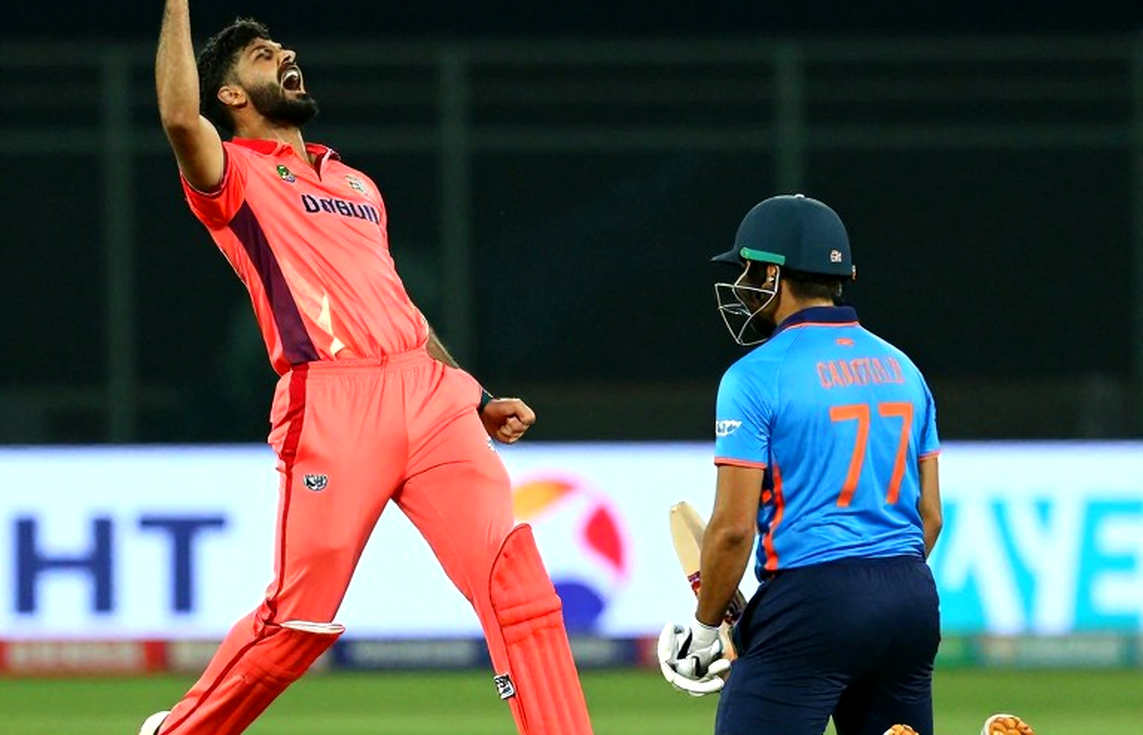
Chasing mastery: three tough targets, three wins
India's strongest suit was chasing. They hunted down 226 in 19.4 overs, 181 in 19.5 overs, and 199 in just 13.2 overs. Three different kinds of chases — a big score taken deep, a moderate score rescued from a crisis, and a target demolished at record pace.
The third chase was the most startling. Scoring 199 in 13.2 overs means batting at nearly 15 runs an over. In men's T20I cricket, that is the second-fastest successful chase of a 190-plus target in terms of balls remaining. It is a statistic that reveals the ceiling of India's batting. When this team is in rhythm, the size of the target stops mattering.
But the same statistic has a flip side. The speed with which India chased is the same speed at which they collapsed in the fourth and fifth matches. The 'chase master' tag is only true when the top and middle order fire. When early wickets fell in clusters, the same team stopped at 172/9 and 191/8. India's chasing is a skill, not a guarantee.
113 off 38: Abhishek Sharma's storm
In the third T20I, Abhishek Sharma made 113 off 38 balls. It was the most explosive innings of the series and the reason a 199-run chase was completed in 13.2 overs. A strike rate of nearly 297 is not just unusual in T20 cricket — it is barely believable. In such an innings, bowlers have no answer; field settings become irrelevant and captaincy plans stay on paper.
Sooryavanshi supported him with 45 off 19 in the same match. Together they finished a 199 chase in 13.2 overs — the clearest symbol of the series' biggest strength. When both openers bat like that, the depth of the opposition attack stops mattering.
There is a caveat, though. Abhishek's 197 runs came at a strike rate of 223.86 — a superb figure, but heavily shaped by that one 113-run innings. Remove it and the returns look far less imposing. This is not a question about Abhishek's ability; it is about how to read statistics. In T20, strike-rate figures move very quickly on the back of one or two innings.
From 70/5 to a win: the middle order's spine
The second big story was the middle order's ability to rescue innings. In the second T20I, India slumped to 70/5 while chasing 181. Losing five wickets in a chase usually signals defeat. But Tilak Varma, Naman Dhir and Nitish Kumar Reddy took the team home in 19.5 overs.
That is proof that India's batting depth is not merely on paper. Batters at six and seven can win matches. That capacity is necessary to win a series, but not sufficient to win a tournament. There is a difference between rescuing a chase from 70/5 and never reaching 70/5 in the first place. In knockout cricket, you cannot keep coming back from 70/5.
Nitish Kumar Reddy's role was significant — quick runs lower down and a contribution with the ball. Tilak Varma held the middle overs together. But the real discovery was Naman Dhir.
Naman Dhir: the finisher emerges
Naman Dhir scored 138 runs at a strike rate of 200 in the series. In the very first match he made 42 not out off 15 balls, playing a decisive role in completing a 226-run chase in 19.4 overs. That is what a finisher does — create a large gap in very few balls.
138 runs at 200 means that every time he walked in, the risk of the scoring rate dropping disappeared. His presence in the final overs was India's biggest weapon. India had long been searching for a batter who could turn a game at six or seven. This series suggested that slot may be filled.
But there is another part to Dhir's series — and it concerns fielding, which we will come to.
Bowling: 1,057 runs, 22 wickets, economy 10.79
Now the weakest part of the series. India's bowlers conceded 1,057 runs and took only 22 wickets — roughly 48 runs per wicket — at an economy of 10.79. That is expensive by any T20 standard.
The number reveals two problems at once. First, the bowlers could not contain. Second, they could not take wickets. Had runs been flowing but wickets falling, one could argue the team traded runs for wickets. Here, neither control nor penetration arrived. Across the series, India's bowling neither restrained nor broke through.
The figure is a warning in itself, but context matters. What was New Zealand's economy? What were the pitch conditions? Were the grounds small? What was a par score? Without those answers, 10.79 should not be treated as a standalone verdict. Still, one thing is clear — in two matches India were set targets around 260 and collapsed to 172/9 in reply. The opposition bowling did the job India's could not.
Arshdeep Singh: most successful, still expensive
Arshdeep Singh was India's most successful bowler with six wickets, but his economy was 9.45. That tells you that even the best-performing bowler could not stem the flow. Arshdeep's main weapons are the yorker and the slower ball at the death; if he is going at 9.45, the rest of the attack can be imagined.
This matters because Arshdeep has been India's most reliable T20 bowler in recent years. If he is expensive, the foundation of the attack appears shaky.
Mayank Yadav: pace, but no control
Mayank Yadav took four wickets but conceded 11 runs an over. It is the classic fast bowler's paradox — wickets, but plenty of runs too. His pace is his biggest asset, but in T20, pace alone does not work. Without line and length control, batters use the pace to find the boundary.
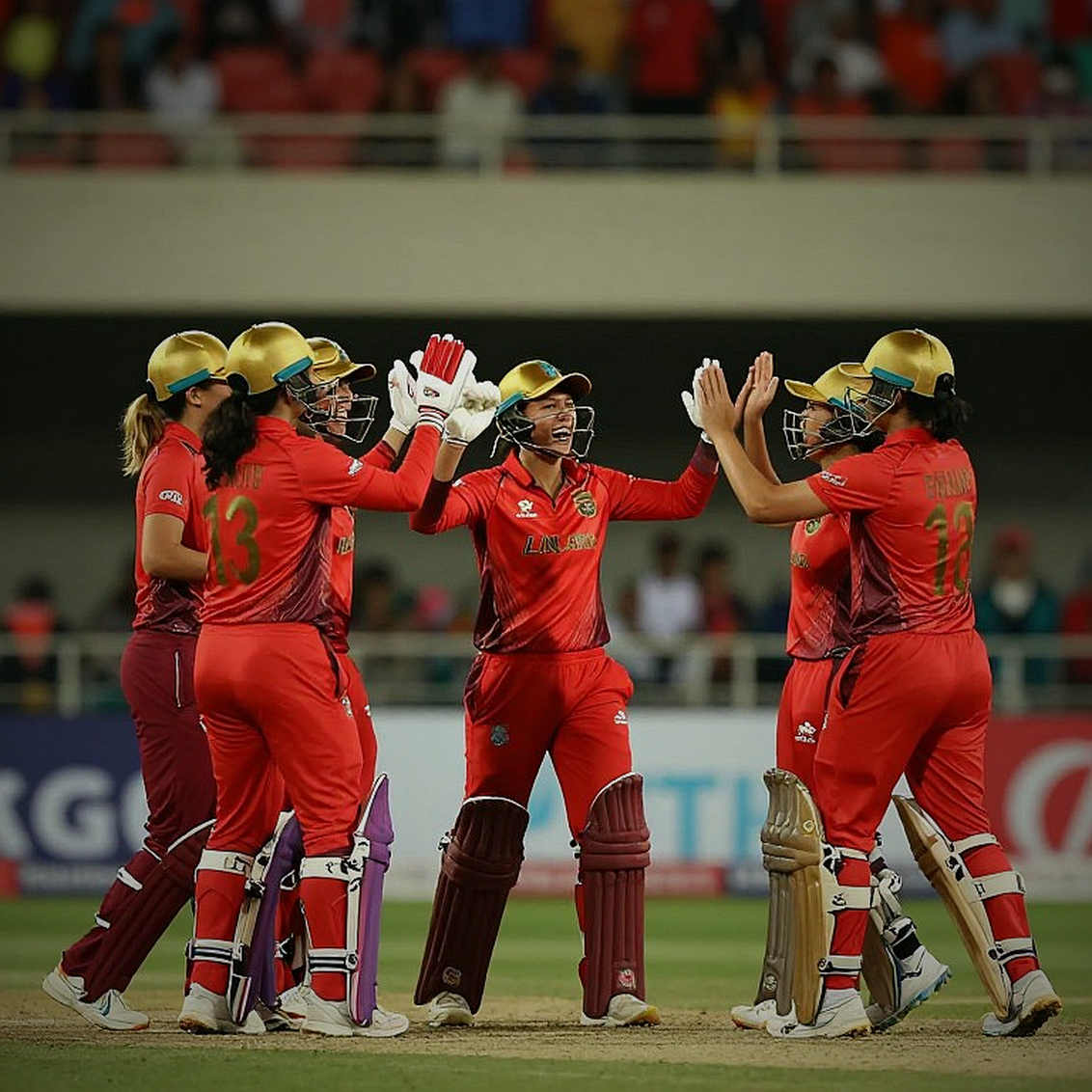
Four wickets at an economy of 11 means he took wickets in patches while conceding so heavily in between that the value of those wickets shrank. For a young fast bowler this is a learning phase; for the team it is a concern, especially in a World Cup where every run counts.
Bhuvneshwar Kumar: experience did not provide the answer
Bhuvneshwar Kumar's return was one of the most discussed stories of the series. Experience, swing with the new ball, death-overs awareness — all were expected. The result was one wicket at an economy above 11.
The number is harsh but cannot be denied. A senior bowler returning and taking one wicket suggests experience alone cannot manage T20 bowling. Batters today know every bowler's weakness, and without a new weapon, experience is not enough.
It leaves India with a difficult question — prioritize experience or current form? The series numbers point to the second option.
Glenn Phillips: the batter India never contained
The clearest evidence of the bowling problem is Glenn Phillips. He scored 341 runs at an average of 113.67 and a strike rate of 185.33. That is not just good form; it is a document of India's helplessness.
An average of 113.67 means he was barely dismissed across the series. A strike rate above 185 means he scored quickly while doing so. One batter dominating an entire series this way is a failure of bowling plans. India would have tried multiple approaches — slower balls, wide yorkers, short balls, changing lines — and none worked.
This is a major signal. Letting one batter average 113 across a series suggests neither wicket-taking edge nor a run-suppression plan. India needed a defined strategy against him — trapping him against the sweep, or testing him with the new ball. Nothing of the sort appeared.
Fielding: the catch that changed a match
The most discussed fielding lapse of the series belonged to Naman Dhir. Tim Seifert was on 13 when he was dropped. He went on to make 93 as New Zealand completed a successful 192 chase.
The arithmetic is simple — had the catch been taken, New Zealand would have been one down for 13 and the chase would have looked very different. Seifert's 93 then reshaped the match. It shows how expensive a single drop can be in T20.
But honesty is required. A dropped catch proves fielding is a concern; it does not fully prove fielding cost India the match. Other factors mattered — bowling rhythm, runs conceded at the death, batting pressure. Even so, if India are to win at the highest level, this decline in fielding cannot be tolerated. Modern cricket saves 15-20 runs in the field, and a dropped catch costs far more than that.
Top order: plenty of options, no combination
This is the most interesting aspect of the series. India have so many top-order options that selection itself has become the problem. The phrase 'problem of plenty' is being used, and it is accurate.
Abhishek Sharma scored 197 at 223.86. That is extraordinary, though as noted, one big innings dominates it. Sanju Samson made 107, including one 67. Sooryavanshi failed at No. 3 but blazed 45 off 19 while opening in the third T20I. Ishan Kishan made 61 off 32 in the last match when others struggled. And Naman Dhir established himself as a finisher.
The real issue is not talent but roles. Who opens? Who bats at three? Who finishes? Those questions were unresolved at the end of the series. Abhishek's strike rate marks him as an opener, but his consistency is questioned. Sooryavanshi looked more comfortable as an opener but was tried at three. Samson's series was ordinary.
The consequence is a different combination almost every game, and changing combinations prevents rhythm. In a major tournament, that can become the biggest problem of all.
The fourth match: when a 260 chase became a dream
In the fourth T20I, India faced a target of 260. Difficult, certainly, but not impossible — especially for a side that had scored 199 in 13.2 overs.
What happened struck directly at that claim. India collapsed to 4/2, then 56/4, finishing at 172/9 — losing by 88 runs without a single substantial innings. The match showed that India's chasing success is conditional. When early wickets fall, the pressure on the middle order becomes so great that sustaining a 200-plus strike rate is almost impossible. India neither survived the start nor generated momentum in the middle overs.

The fifth match: 19/2 and then 191/8
The fifth T20I repeated the pattern. India fell to 19/2 and could only reach 191/8. There was no consistency in the chase, and the team looked compressed under pressure.
Both losses share one feature — clusters of early wickets. When two or three fall quickly, India's batting plan changes completely. Aggression drops, the run rate slows, and too much is left for the end. That is a strategic weakness, not merely a form issue.
The high-strike-rate argument: rationale or rationalisation?
An interesting argument is made that India's top-order instability is the product of a deliberate high-risk approach. Batters, the claim goes, are told to attack from the first ball regardless of wickets. There is merit here — in modern T20, strike rate is the most valuable resource and slow starts lose matches.
But before accepting it fully, evidence is needed. Has the team management publicly defined these roles? Were batters given explicit instructions? No direct proof emerged during the series. Without it, the argument risks sounding like post-hoc rationalisation.
If the high-strike-rate approach was genuinely the plan, it should have shown up in the fourth and fifth matches too — wickets falling quickly, but the score moving quickly as well. Instead, the team batted slowly and stalled at 172/9 and 191/8. Strategy and execution diverged.
The small-sample trap
One more thing to keep in mind while reading series numbers: five matches is a very small sample. Abhishek's 223.86 strike rate is built on one 113-run innings. Samson's 107 includes one 67. Remove those and the numbers look very different.
This matters because a player should be neither crowned nor discarded on five matches. A true picture needs long-term data, opposition quality and conditions. The same applies to bowling. An economy of 10.79 is poor, but if 200-plus scores were the norm in this series, it must be read in that context. Without comparative data — New Zealand's economy, phase-wise averages, pitch behaviour — treating one figure as the final truth would be wrong.
Conclusion: bowling is the bigger worry, the top order is not
Weighing both ends of the series, it becomes clear that India's biggest problem is not top-order selection — it is bowling.
The top-order issue is a good problem to have. Options exist; only the combination needs deciding. With time and matches, it can be settled. The bowling problem is structural. When a whole series produces 1,057 runs conceded, 22 wickets, and a best economy of 9.45, that is not merely poor form. It raises questions of planning, skill and execution at once.
Glenn Phillips' 341 runs are the symbol of this problem. Letting one batter average 113 at a strike rate of 185 across a series suggests India had no real plan for him. The same applies to fielding — Seifert's drop is one incident, but if it becomes a pattern it will compound the bowling pressure.
What India must do is clear. First, define bowling roles explicitly — who takes the powerplay, who bowls the death, who controls the middle. Second, select on control and wicket-taking ability rather than experience or pace alone. Third, fix a top-order combination and give it a sustained run so batters understand their roles.
A 3-2 win is a genuine achievement and should not be diminished. The chasing ability, the middle-order depth and the discovery of a finisher like Naman Dhir are real gains. But if India take this bowling and fielding into a major tournament, the batting will have to chase 200-plus every time. It will not always happen.